
Looking for professional in-home dog training in Gilbert, AZ?
I’m Sam Basso, known as Sam The Dog Trainer. I live in Gilbert and provide private, in-home dog training (such as puppy training in Gilbert AZ) for owners who want practical help with puppies, obedience, leash walking, and everyday behavior problems.
Perhaps your puppy bites your hands, your dog pulls on walks, or visitors turn your home into a barking and jumping contest. Maybe you recently adopted a dog and need help understanding what your dog needs.
With more than 30 years of professional experience, I help you understand your dog’s behavior, develop a workable training plan, and learn the skills you’ll need to succeed together. We start in your home and, when appropriate, progress into your neighborhood and carefully selected public locations.
Call or text 602-708-4531 to discuss your dog, pricing, and scheduling.
We Start Where Your Dog’s Life Happens: At Home
You want a dog who greets visitors politely, listens when you need him to, and is easier to live with every day. That’s why we begin in your home. With in-home dog training, I can see what happens when someone comes through the door, how your dog interacts with your family, and which daily routines are helping or making things harder. In-home dog training means private lessons, originating from your home and then transitioning to outdoor public lessons (where appropriate) to address distractions and to prepare for potential real world work or emergencies.
You get guidance tailored to the situations you actually face. Familiar surroundings also give your dog a chance to get to know me without the added demands of an unfamiliar facility, other dogs, and a room full of strangers. We can begin with manageable exercises while I coach you through each step.
Training should fit your dog and your household. As skills develop, we can take them into suitable outdoor settings and build toward greater distractions. We start at home because that’s where you need the results to work.
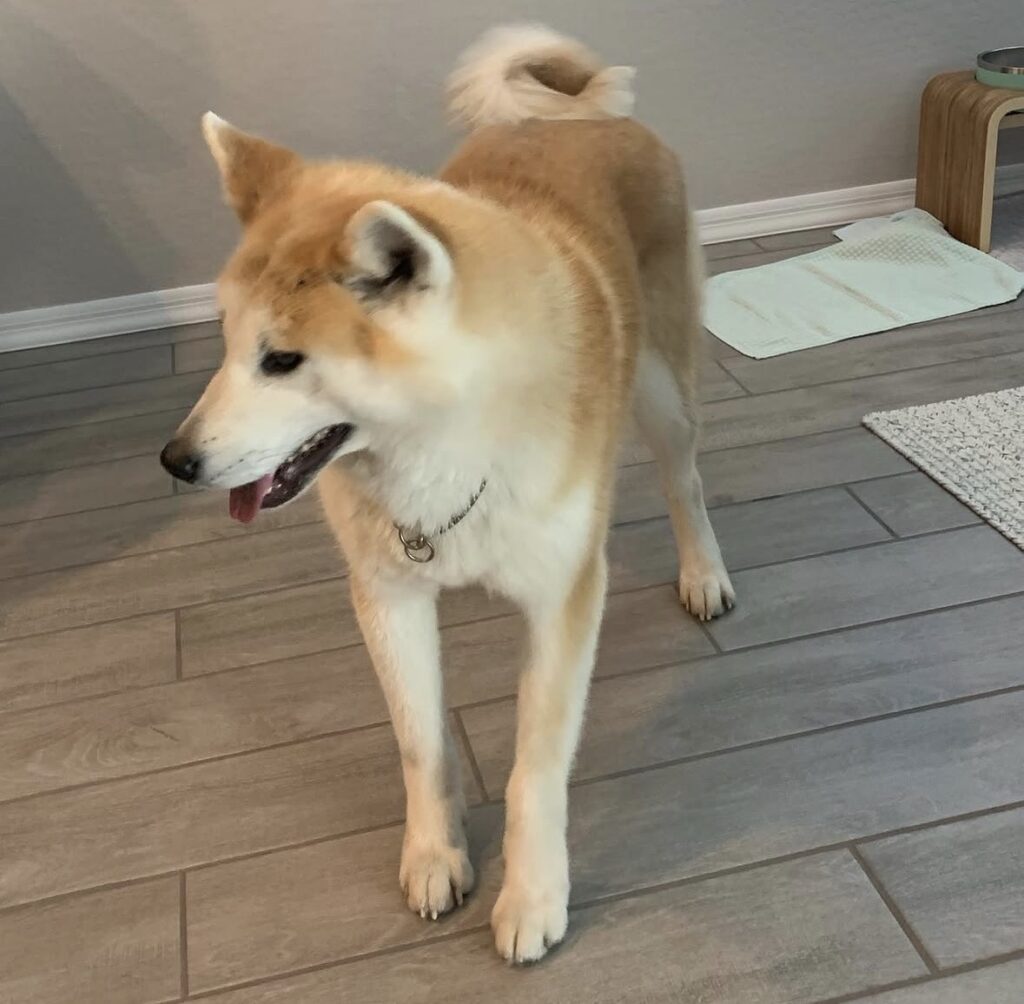
Next, We Take Training Into Your Backyard
Your backyard gives us room to build on what your dog has learned indoors. In a securely enclosed yard, we can practice coming when called, staying in position, and responding at greater distances including off-leash exercises when appropriate.
You practice alongside me, developing your timing, communication, and confidence as your dog’s skills grow. For households with more than one dog, the yard can also provide a useful setting for teaching dogs individually and, when they are ready, working them together.
We build success before adding harder distractions. Moving too quickly into a busy public setting can leave both you and your dog overwhelmed. The backyard provides a manageable next step for in-home dog training, helping you prepare for walks and other everyday situations. If you don’t have a suitable backyard, we choose another appropriate setting, such as the area in front of your home, using a leash or long line as needed.
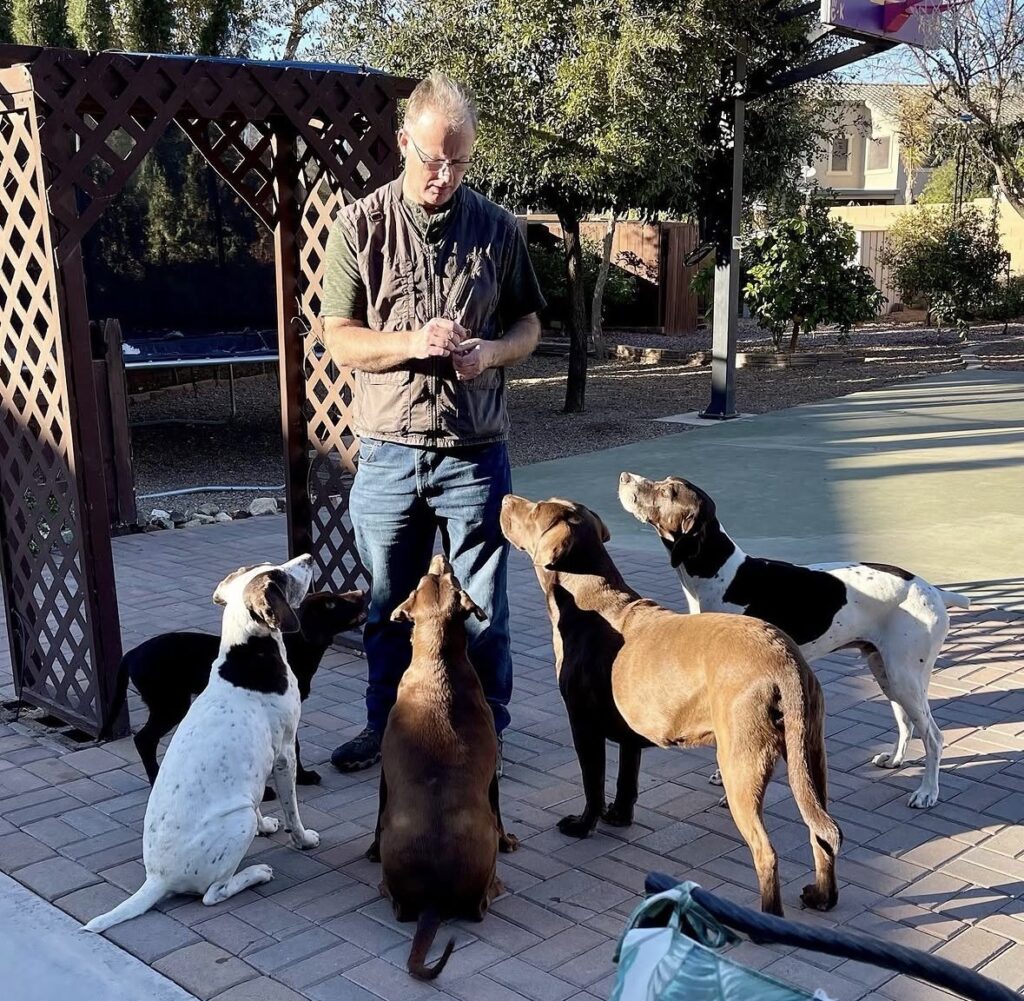
Training In Front Of Your Home
Two of the most common frustrations dog owners experience are dogs pulling on the leash and dogs not listening when they’re outside. That’s why the next step in our in-home dog training plan takes place right in front of your home, where many of your dog’s everyday activities begin.
Think about everything that happens here. You leave the house to take your dog for a walk. You load your dog into the car or bring him home after an outing. Visitors arrive at your front door. Your dog encounters neighbors, passing cars, bicycles, other dogs, and unfamiliar sights and sounds. And, of course, you want your dog to enter and exit your home safely without rushing through an open door or running away.
These everyday situations give us excellent opportunities to teach practical obedience, leash manners, impulse control, and reliable responses to your instructions. We can practice walking calmly on a leash, waiting at doorways, coming when called, and paying attention to you as distractions gradually increase.
Rather than expecting your dog to behave perfectly on a busy public sidewalk, we start close to home, where we can adjust the difficulty of the exercises and build on the skills your dog has already learned.
Our goal is not simply to teach commands. It’s to help you develop a dog who is easier, safer, and more enjoyable to live with in the situations you encounter every day.
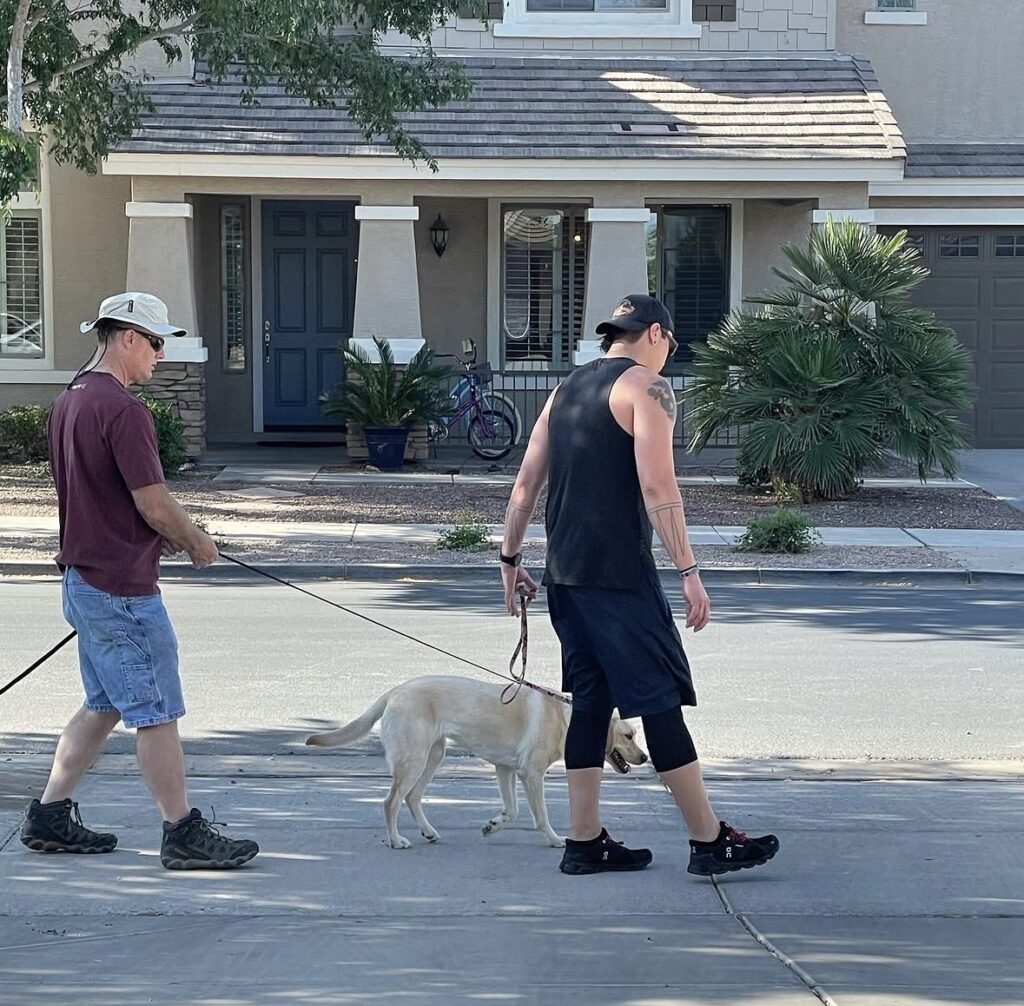
Then We Take Training Into Public
A dog who listens beautifully at home may behave very differently at a park, on a busy sidewalk, or around unfamiliar people and dogs. That’s why training in public is an important next step in developing reliable obedience and good manners. Once we’ve established the necessary foundation at home, we begin applying those skills in more challenging environments.
I carefully select public training locations in and around Gilbert based on your dog’s individual needs, abilities, and training goals. We often work in parks and other suitable public areas where we can practice around distractions such as strangers, unfamiliar dogs, bicycles, traffic, and other everyday activities. These lessons help us develop new skills, address existing problems, and teach your dog how to respond appropriately when the world becomes more interesting or distracting.
Our training can also prepare your dog for outings, errands, restaurants with dog-friendly seating, and travel. We may practice safely entering and exiting your vehicle, settling during car rides, and behaving appropriately around passengers. Some dogs become anxious, overly excited, or difficult to manage in vehicles, so these situations may need special attention. Not every dog is temperamentally or behaviorally suited for crowded public places or restaurant environments, and part of my job is to help you recognize what is realistic and appropriate for your dog.
As your dog progresses, we can introduce more advanced exercises involving greater distances, longer durations, and increasingly challenging distractions. With suitable dogs, I sometimes work at distances approaching 100 yards in appropriately controlled settings. The objective is to develop useful skills while maintaining appropriate safety precautions, not simply to see how far away your dog can obey a command.
Public training also provides a foundation for more specialized activities, including therapy dog preparation, dog sports, hiking, and outdoor recreation. For example, hiking with a dog requires much more than teaching him to come when called in your backyard. Trails introduce unfamiliar terrain, other hikers, wildlife, and natural hazards. Dogs being prepared for off-leash activities need additional training, careful assessment, and practice in legally permitted, appropriately safe environments.
The important principle is that dogs don’t automatically apply everything they learn at home to unfamiliar places. A dog who performs well in your living room or a training facility has not necessarily learned how to handle a busy park, a passing dog, or the distractions of everyday public life.
That’s why we take training into the real world. We progress at a pace appropriate for your dog, building practical skills and helping you learn how to handle the situations you’re likely to encounter together.
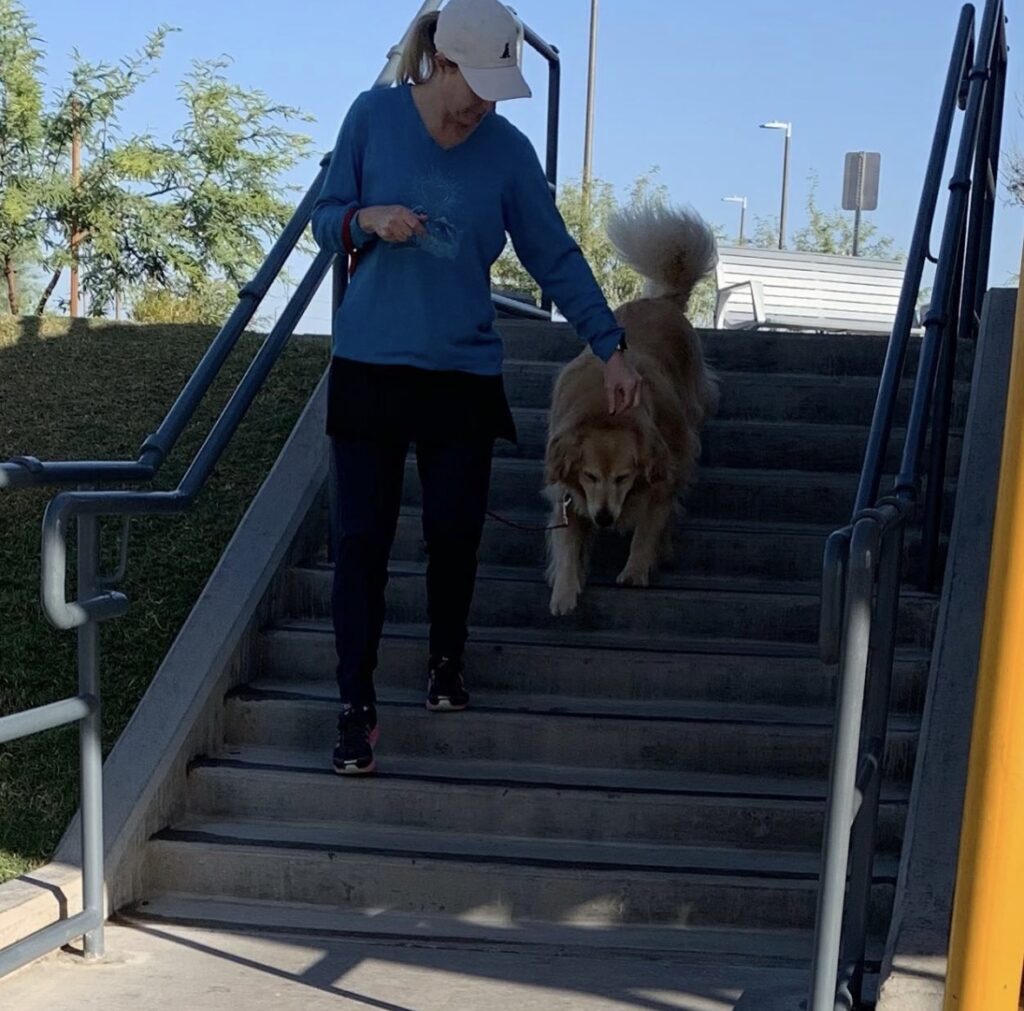
Real-World Training for Real-World Challenges
This Golden Retriever was being prepared for potential therapy dog work, but he was afraid of stairs. I specifically selected this local park because it offered a grassy slope and solid concrete stairs where we could gradually build his confidence before attempting more intimidating surfaces, such as open-grate metal stairs. We also needed to prepare him for navigating unfamiliar places where strangers, other dogs, and distractions might be present. This is why I carefully select public training locations: we’re not just practicing obedience commands. We’re helping dogs and their owners develop the skills they need for the real world.
Training For Your Dog, And You
My approach to in-home dog training in Gilbert focuses on both the dog and the owner. During private lessons, I work with both your dog and the people responsible for your dog’s care.
I look at when a problem happens, what occurs before and afterward, your dog’s daily routines, and what your household can realistically do. We consider relevant health concerns, previous experiences, and the demands being placed on your dog.
Your plan may include:
- Practical skills for your dog.
- Coaching and homework for you.
- Changes to household routines or management.
- Appropriate exercise, enrichment, and recovery.
- Coordination with your veterinarian or another professional when needed.
The objective is to help you handle real situations more effectively. Performing a command during a lesson is one step; using that skill successfully in your home or on a walk takes practice and appropriate progression.
Gilbert Puppy Training
If you’re looking for puppy dog training in Gilbert, you have come to the right place. Puppies need guidance, but they also need expectations that fit their age and development.
I help Gilbert owners establish routines and teach early skills, including:
- House training and bathroom schedules.
- Puppy biting and appropriate chewing.
- Jumping and greeting manners.
- Beginning leash skills.
- Coming when called.
- Appropriate social experiences.
- Basic household communication.
We consider your puppy’s health, breed characteristics, temperament, and experiences when deciding what to do next. Socialization does not mean forcing a puppy to meet every person or dog.
You can also contact me before bringing a puppy home. Planning ahead can help you choose supplies, organize your household, and prepare for those first days together.
Obedience and Everyday Manners
Private obedience lessons can help you teach skills that make daily life more manageable.
Depending on your goals and your dog’s readiness, we can work on:
- Sit, down, stay, and coming when called.
- Walking on a more manageable leash.
- Waiting at doors.
- Leaving things alone.
- Greeting people more politely.
- Responding around suitable distractions.
- Following useful household routines.
Dogs do not automatically transfer everything they learn from one situation to another. We build from manageable exercises toward the circumstances in which you need those skills.
Help Understanding Behavior Problems
Barking, pulling, jumping, hiding, or difficulty around other dogs can arise for different reasons. A description such as “reactive” tells us something about what someone sees, but it does not explain the cause.
We examine the circumstances before choosing a response. Your dog may need clearer teaching, a different setup, more appropriate activities, reduced pressure, or professional medical evaluation.
My approach emphasizes understanding the dog, teaching clearly, and setting realistic expectations. I do not assume that a frightened, confused, or overwhelmed dog needs harsher treatment.
If behavior changes suddenly or pain or illness may be involved, contact your veterinarian. Some concerns require a veterinary behaviorist or another specialist.
Tell me about any biting history or significant safety concern before scheduling. We need to determine whether the case is appropriate for my services and what precautions or referrals may be necessary.
Why Train at Home?
One advantage of private dog training in Gilbert is that we can begin where your dog actually lives. Your dog’s behavior occurs within your household: at the front door, around meals, when visitors arrive, or while you are getting ready for a walk.
In-home lessons allow us to work with those circumstances. I can observe relevant routines, help you change the setup, and teach you how to practice with your dog.
When appropriate, we may also work in a suitable outdoor setting. That depends on your dog’s readiness, the environment, and the skills we are developing.
Training should fit your available time, physical abilities, and family responsibilities. If an exercise is too difficult to carry out, we need to adjust the plan.
How Lessons Work
Start With a Conversation
Call or text me with a brief description of your dog and what you need help with.
Useful information includes:
- Your dog’s age and how long you have had your dog.
- The problems you are experiencing.
- What you have tried.
- Relevant health concerns and previous training.
- Any history of biting or threatening behavior.
- Your location and general availability.
We discuss whether my services fit your needs and an appropriate starting point.
Understand the Situation
Our initial work focuses on your dog, your household, and your goals. I ask questions, observe relevant behavior, and explain what I think needs attention.
Build Your Plan
I demonstrate exercises, coach you as you practice, and explain what to work on between appointments. You should understand what you are doing, why you are doing it, and what progress might look like.
Practice and Adjust
What happens between lessons matters. We use your observations and your dog’s progress to decide when to advance, change an exercise, or reconsider part of the plan.
Experience With Gilbert Dogs and Their Owners
My experience providing dog training in Gilbert includes working with dogs of many breeds, ages, and backgrounds. I have worked with many dogs and households in Gilbert over the years.
This page is to illustrate how I approach lessons: identify the need, teach appropriate skills, and help the owner apply them. Each dog’s history, abilities, and circumstances influence the plan.
I wrote this because I want you to learn more about my background and approach.
Questions About Private Dog Training
Do you come to homes in Gilbert?
Yes. I provide private, in-home dog training in Gilbert. Other lesson settings may be appropriate depending on your goals and your dog’s readiness.
Can an adult dog learn?
Yes. Adult dogs can learn new skills. We consider health, previous experience, established habits, and your goals when developing the plan.
How many lessons will we need?
That depends on your goals, your dog’s needs, and the practice you can provide. We discuss a suitable arrangement rather than promise the same timeline for every dog.
How much does training cost?
Contact me to describe your dog and the help you need. I will explain the proposed lesson arrangement, what it includes, and the price before you commit.
Can you guarantee that every problem will be solved?
No. Dogs differ, and outcomes depend on several factors, including health, history, environment, and the work the household can carry out. I explain realistic goals and relevant limitations.
Do you work outside Gilbert?
I also serve surrounding communities, including Chandler, Mesa, Queen Creek, and San Tan Valley, along with other parts of the Phoenix metropolitan area. Contact me to confirm availability for your location.
Let’s Talk About Your Dog
If you need private in-home dog training in Gilbert, call or text me to discuss your dog. You do not need to know the cause of the problem before calling. Tell me what is happening and what you would like to improve.
We can discuss whether private lessons are a good fit, what the next step involves, and the proposed cost.
Call or text Sam Basso at 602-708-4531.
Sam The Dog Trainer — private in-home dog training in Gilbert, Arizona.